AI · IoT Full-stack
Doctor-Green
Doctor-Green is a smart-farm platform that brings crop-disease diagnosis and IoT environment control onto one screen. I planned and built it solo, from sensor to dashboard.
It grew out of a VGG16 plant-disease-diagnosis app I built with team MAKENEW, which won the Excellence Award at the 2024 ICT·SW Women's Start-up Competition. That model stayed below the 95% accuracy the team had set as its bar for release, so in 2026 I rebuilt the project as a full smart-farm platform and restarted the diagnosis model from the data up.
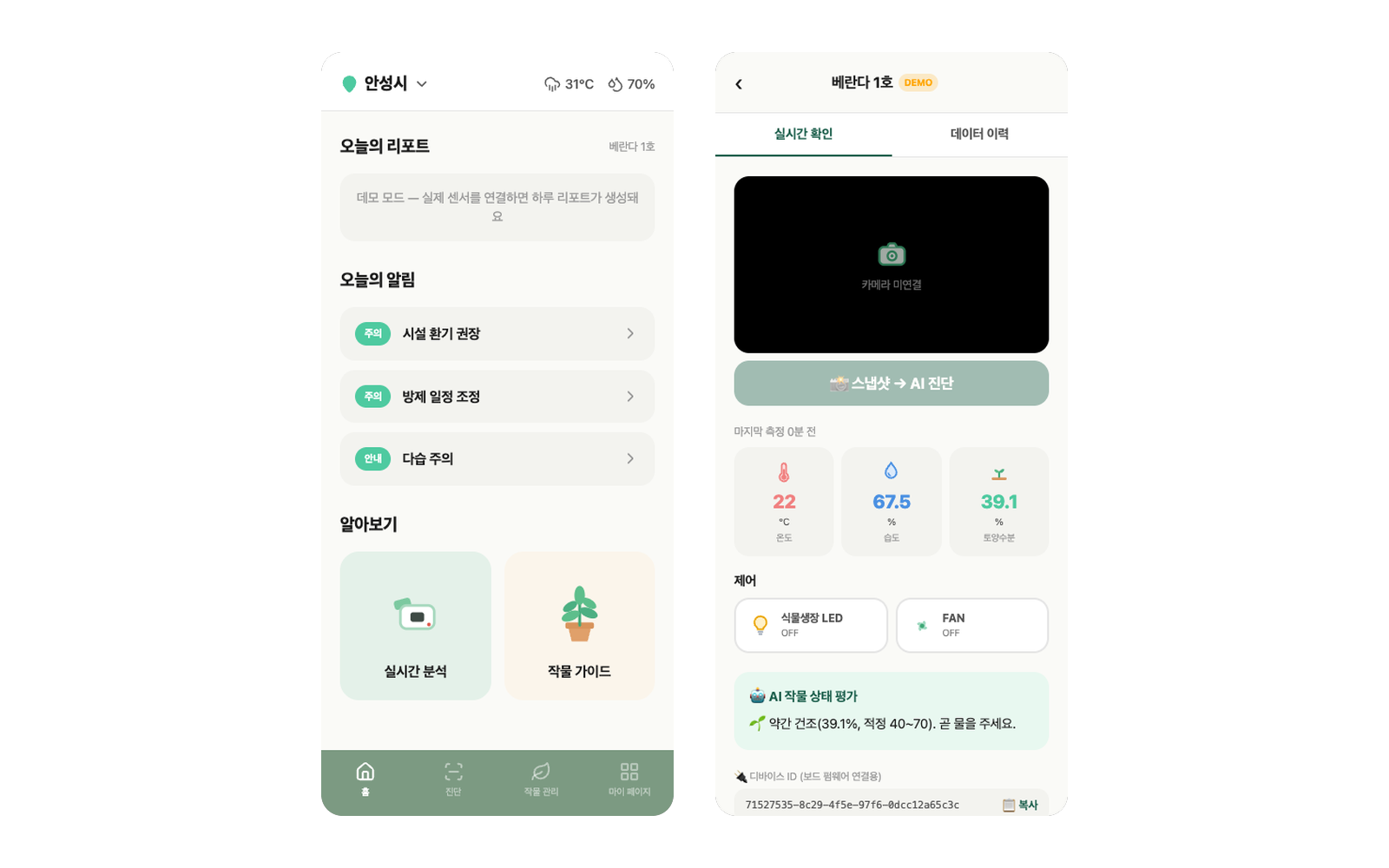
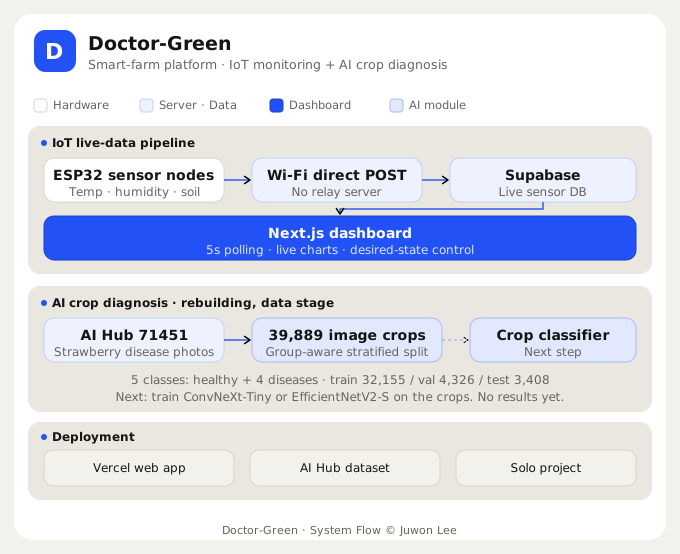
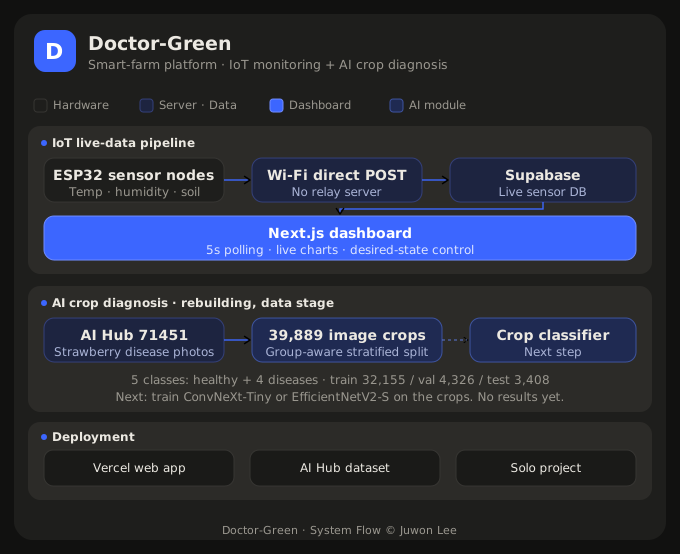
The IoT side is built end to end and deployed on Vercel as a live demo. ESP32 sensor nodes post environment data directly to Supabase over Wi-Fi, with no relay server. The Next.js dashboard refreshes every 5 seconds, and actuators such as LEDs and fans are controlled from the app.
The diagnosis model is still at the data stage. The training set holds 39.9K image crops (train 32.2K / val 4,326 / test 3,408) from 5 classes, healthy plus 4 diseases. Training the crop classifier, ConvNeXt-Tiny or EfficientNetV2-S, is the next step; there are no results yet.
Highlights
- Data flow built end to end: ESP32 posting directly to Supabase over Wi-Fi → Next.js dashboard on 5-second polling.
- LED and fan control from the app.
- The 2024 prototype, built with team MAKENEW, won the Excellence Award at the 2024 ICT·SW Women's Start-up Competition.
- Built the training set: 39.9K image crops (train 32.2K / val 4,326 / test 3,408) across 5 classes (healthy plus 4 diseases).
- Next.js 16 + TypeScript + Tailwind web app deployed on Vercel as a live demo.
Architecture
How the app is structured: screens, roles, and data flow.
This site keeps anonymous visit statistics. Privacy